Contact Us

Why Choose All Season Truck Tires for Global Fleets?

Global fleets rarely operate under one predictable sky. A truck may leave a dry port, cross a mountain pass, and reach a wet industrial city within the same shift. That changing route makes tire selection a serious operating decision. All season truck tires can provide balanced traction across rain, mild snow, heat, and long highway distances. They also reduce the need for frequent seasonal tire changes, which can save workshop time and simplify fleet planning.

Kevin Rohlwing, a recognized commercial-tire educator, offers a practical reminder: “Every tire decision is a safety decision.” His point matters when a fleet manager studies tread depth, casing strength, rolling resistance, and load capacity together. A tire that performs well on wet pavement may also support steadier braking and more consistent fuel use. Small differences become significant across hundreds of vehicles.

Still, all season truck tires are not a universal answer. Severe winter routes may demand certified winter tires. Heavy construction work may require stronger regional or off-road designs. Fleet history should guide the choice. Review inspection records, roadside temperatures, axle loads, and actual mileage before making a broad purchase. That step is sometimes skipped. It should not be.

The strongest choice balances safety, uptime, comfort, and total operating cost. It also respects regional conditions. For global fleets, that balance can make all season truck tires a practical foundation for more predictable transport performance.

Why Choose All Season Truck Tires for Global Fleets?

Definition and Role of All-Season Truck Tires in Global Fleets

Why Choose All Season Truck Tires for Global Fleets?

All-season truck tires are designed to perform across changing weather conditions throughout the year. Their tread patterns and rubber compounds balance traction, durability, steering control, and fuel efficiency. They are not specialized winter tires, nor are they ideal for every extreme climate.

For global fleets, this balanced role can simplify tire planning across multiple regions. A truck may leave a dry industrial zone, cross a wet mountain road, and reach a colder inland route within one journey. All-season tires help maintain predictable handling during these transitions. Fleet technicians also benefit from fewer tire changes, simpler inventory control, and more consistent maintenance schedules. Still, “all-season” can be misunderstood. Severe snow, ice, or high-heat routes may require a more specialized specification.

Real fleet experience shows that tire choice must follow operating data, not labels alone. Managers should review axle loads, average speed, road surfaces, rainfall, temperature ranges, and seasonal mileage. Pressure checks matter every day. Uneven wear may reveal alignment or suspension problems before a failure occurs. Tread depth and casing condition also deserve regular inspection.

No tire solves every route.

A practical fleet trial can compare braking behavior, removal rates, fuel use, and driver feedback across regions. Results may challenge initial expectations. A tire that performs well in moderate climates might wear faster on rough, heavily loaded roads. That is an important weakness to identify before wider deployment. Careful records and local technical guidance make the final decision more reliable.

Key Performance Features Across Changing Weather Conditions

Why Choose All Season Truck Tires for Global Fleets?

Key Performance Features Across Changing Weather Conditions

Global fleets face rain-soaked highways, dry heat, light snow, and sudden temperature drops. All-season truck tires are designed to maintain useful grip across these transitions. Their tread patterns channel water away from contact areas, reducing unstable steering on wet pavement. Road feel remains important. Drivers notice it during lane changes, especially when trailers carry uneven loads. In colder regions, flexible compounds can preserve traction better than tires designed only for warm weather. Performance still depends on the actual climate, not the label.

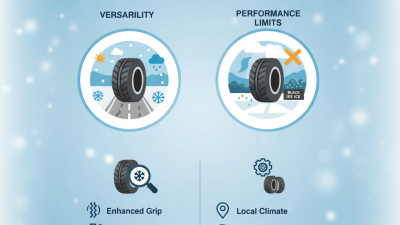
A fleet manager should compare stopping distance, tread wear, and pressure stability across local routes. Practical testing matters. Technicians can inspect shoulder wear after motorway runs and check tread depth before mountain work. In hot conditions, correct inflation limits heat buildup and protects casing strength. On icy roads, however, all-season capability has limits, and specialized winter equipment may be safer. That boundary deserves honest attention. No tire removes weather risk.

Global operations can also benefit from predictable maintenance intervals. A consistent tire design may simplify training, spare planning, and inspections across depots. Yet identical specifications may not suit every axle, payload, or road surface. Fleet data should guide the choice, including braking events, mileage, temperature, and failure reports. Small pressure losses are easy to overlook. They can increase fuel use and accelerate irregular wear. Regular reviews help teams match tire performance with real operating conditions, rather than relying on assumptions.

Why Choose All-Season Truck Tires for Global Fleets?

Key performance priorities across changing weather conditions

All-season truck tires are designed to balance dry-road handling, wet traction, tread durability, and moderate winter capability. The values shown are a normalized fleet-planning index from 1 (lower priority) to 5 (higher priority), reflecting the engineering importance of each feature under common operating conditions rather than laboratory test results.

Operational Benefits for Long-Haul and Regional Trucking

Why Choose All Season Truck Tires for Global Fleets?

Operational Benefits for Long-Haul and Regional Trucking

All-season truck tires can simplify mixed-route operations. They suit long-haul corridors, regional deliveries, and changing weather. Fleet managers may reduce seasonal tire changes, storage needs, and workshop interruptions. That matters when vehicles cross several climate zones in one week. The U.S. Department of Energy reports that fuel economy can fall by about 0.2% for every 1 psi of underinflation. Consistent pressure remains essential.

All-season designs also support predictable handling on wet highways, dry roads, and occasional light snow. Their value is operational, not magical. Severe winter conditions still require specialized equipment and route planning. The International Transport Forum continues to identify road freight as a major part of global inland transport. Small efficiency losses can therefore become expensive across thousands of vehicles. Yet tire selection must reflect axle loads, road quality, speed, and local regulations.

Tips: Track pressure, tread depth, and casing condition during every inspection. Use telematics data to compare fuel use across routes. Review irregular wear after each rotation. Do not rely only on dashboard warnings. A practical trial on a limited group can reveal weaknesses before fleet-wide adoption. Results may disappoint if maintenance discipline is poor. That is worth confronting early.

Factors for Selecting Tires Across Markets and Fleet Types

Why Choose All Season Truck Tires for Global Fleets?

Selecting all season truck tires for global fleets requires more than checking tread patterns. Routes may cross humid ports, dry highways, mountain roads, and cold inland regions. Tire performance should match climate, road surface, axle position, and seasonal loading. A tire suited to regional delivery may struggle under long-haul weight. That assumption can fail.

Fleet managers should review load capacity, heat resistance, wet braking, rolling resistance, and sidewall durability. They should also compare local regulations for tread depth, winter markings, and axle requirements.

In some markets, severe winter conditions demand dedicated winter tires. All season options may remain practical for moderate climates and mixed routes. Test them on real routes, not only laboratory surfaces.

Fleet data makes the decision more reliable. Track air pressure, uneven wear, casing damage, fuel use, and roadside removals.

A tire that lasts longer but increases fuel consumption may not reduce operating costs. Maintenance access matters too.

Standardizing tire sizes can simplify training and inventory, but excessive standardization creates risk. Different trucks carry different loads. Different roads expose different weaknesses. Regular inspections should include valve condition, tread cuts, shoulder wear, and pressure changes after temperature shifts. Small details matter. Yet fleet teams should question their own assumptions each season, because traffic patterns, cargo weights, and weather rarely stay consistent.

Maintenance, Safety, and Cost Considerations for Fleet Managers

All-season truck tires can simplify global fleet management, but only when routes and weather are studied carefully. A mixed fleet crossing dry highways, tropical rain, and mild winter roads benefits from one dependable tire specification. Fewer tire types can reduce storage space, training time, and fitting errors. However, all-season designs may lose grip in severe snow or ice. That compromise deserves honest review.

Maintenance directly affects safety and operating cost. The U.S. Department of Energy reports that every 1 psi of underinflation across all tires can reduce fuel economy by about 0.2%, with larger losses possible. A loaded truck with visibly soft tires also develops heat faster. Technicians should record pressure, tread depth, valve condition, and irregular wear during scheduled inspections. The American Transportation Research Institute’s 2023 operating-cost report placed tire expenses near 5 cents per mile for trucking operations. Small defects become expensive quickly.

Tips: Check cold pressure before departure. Use tread-depth records by axle. Review removals by route, load, and weather. Rotate only when the axle design permits it. Pressure monitoring helps, but it cannot replace a physical inspection. Managers should compare all-season performance against regional winter requirements, not just purchase price. A tire lasting longer may still cost more if it increases stopping distance or fuel use. That is the uncomfortable part.

Why Choose All Season Truck Tires for Global Fleets? - Maintenance, Safety, and Cost Considerations for Fleet Managers
Category Fleet Metric or Decision Factor Typical Operating Benchmark All-Season Tire Consideration Fleet Management Action
Maintenance Cold inflation-pressure inspection Check at least monthly and before long-distance trips; use the vehicle or tire manufacturer’s specified pressure. Correct pressure helps reduce irregular wear, heat buildup, rolling resistance, and handling risk across mixed routes. Record pressure by vehicle and axle position. Do not use the maximum pressure molded on the sidewall as the normal operating setting unless specified.
Maintenance Tread-depth replacement threshold 2/32 inch is a commonly used legal minimum in the United States; wet-weather replacement planning is often started earlier, around 4/32 inch. All-season tread can remain serviceable in several climates, but wet and winter traction generally decreases as tread wears. Set an internal removal threshold that reflects rainfall, temperature, route risk, and local regulations rather than relying only on the legal limit.
Maintenance Tire rotation and alignment Rotation intervals commonly fall around 5,000–8,000 miles, subject to the vehicle manufacturer, axle configuration, and wear pattern. Consistent rotation and alignment can improve wear uniformity, especially on vehicles with high steer-axle loads or frequent urban maneuvering. Inspect shoulder wear, heel-and-toe wear, cupping, and pull. Correct suspension or alignment problems before fitting replacement tires.
Safety Snow-service capability The Three-Peak Mountain Snowflake symbol identifies tires that meet a defined severe-snow performance test; ordinary all-season labeling does not provide the same designation. Standard all-season tires may be suitable for moderate climates but may not provide adequate performance for sustained ice, deep snow, or severe winter routes. Use severe-snow-rated equipment, chains, or a seasonal tire program where climate, law, terrain, or stopping requirements justify it.
Safety Age and condition control Inspect tires annually after five years of service; many industry guidelines recommend replacing tires at ten years from manufacture, regardless of tread, subject to the applicable policy. Heat, ultraviolet exposure, underinflation, storage conditions, and heavy loading can accelerate aging before tread is fully worn. Capture the DOT or equivalent date code, inspect sidewalls and bead areas, and remove tires with cracks, bulges, exposed cords, or impact damage.
Cost Total cost of ownership Evaluate purchase price together with mileage, retread potential, fuel use, downtime, roadside events, and disposal cost. A single all-season specification can simplify procurement and reduce seasonal changeovers, but savings depend on climate and route suitability. Compare cost per mile or kilometer by application, axle, payload, road surface, and climate instead of comparing purchase price alone.
Cost Rolling-resistance impact Tire rolling resistance is one of several factors affecting fuel or energy consumption; pressure, speed, load, aerodynamics, and driving behavior also matter. An efficiently specified all-season tire may support lower operating costs, but fuel savings should be validated through controlled fleet trials. Track fuel or energy consumption against route, payload, weather, pressure compliance, and tire specification before adopting a fleet-wide standard.
Operations Fleet standardization Fewer tire sizes and tread patterns can reduce inventory complexity, training needs, and fitting errors. All-season standardization is most practical when vehicles operate across regions with broadly similar weather and road conditions. Maintain an approved fitment list by vehicle, axle, load index, speed rating, and local regulatory requirement.
Operations Load and speed compliance The tire’s load index, speed rating, and load-versus-pressure table must support the actual axle load and operating speed. A suitable tread pattern cannot compensate for overloading, incorrect pressure, or a tire specification below the vehicle requirement. Verify axle weights at representative payloads and prevent operation beyond the tire, wheel, axle, or vehicle limits.
Global deployment Climate and regulatory variation Winter-tire rules, chain requirements, minimum tread laws, labeling systems, and inspection standards differ by country and region. A globally consistent all-season policy may require regional exceptions to remain safe and legally compliant. Create a regional matrix covering temperature, precipitation, snow and ice exposure, road quality, legal markings, and emergency-equipment requirements.
Planning note: The benchmarks above are general fleet-planning ranges and widely used industry guidance. Final tire selection, pressure, replacement timing, and winter suitability must follow the vehicle manufacturer, tire manufacturer, applicable legislation, axle-load requirements, and actual operating conditions.