Top 10 All Weather All Terrain Tires for Global Buyers?
Choosing among the top 10 all weather all terrain tires requires more than aggressive tread pictures. Drivers need evidence, context, and honest trade-offs.
Smithers’ 2024 global tire industry analysis highlights continued demand for replacement tires, supported by vehicle growth, longer driving distances, and changing road conditions. Its findings suggest that buyers increasingly value versatility, durability, and performance across multiple environments. However, “all weather” does not mean unlimited capability. A tire may handle rain, gravel, and light snow well, yet remain unsuitable for severe winter roads or deep mud.
Every road differs.
David Shaw, founder of Tire Industry Research, has summarized the buying challenge clearly: “Every tire is a compromise.” That principle guides this ranking. A tire designed with large shoulder blocks may improve loose-surface traction, but it can create more noise on highways. A softer compound may increase wet grip, while reducing tread life under heavy towing. These details matter in real use, from a wet suburban intersection to a rocky forest access road.
The U.S. Tire Manufacturers Association emphasizes regular pressure checks, tread inspections, and load awareness in its tire-safety guidance. ETRTO standards also reinforce the importance of correct sizing, load ratings, and speed markings. This article considers those fundamentals alongside independent test results, manufacturer specifications, user experience, and regional climate demands.
Still, no list is perfect. Testing conditions cannot reproduce every driver’s route. A strong choice for Colorado may disappoint in coastal heat. Readers should treat this guide as a practical starting point, not a substitute for vehicle-specific advice. The best all weather all terrain tires balance safety, comfort, traction, mileage, and price for one clearly defined driving life.
What Defines an All-Weather All-Terrain Tire
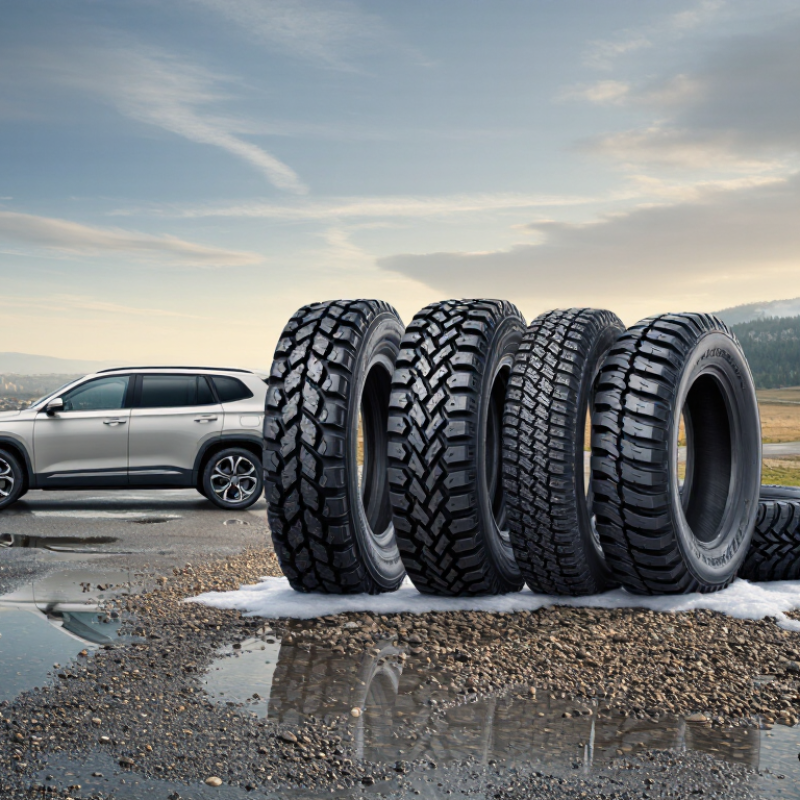
An all-weather all-terrain tire combines road comfort with off-road traction. It must handle rain, light snow, gravel, and changing temperatures. Unlike a highway tire, it uses deeper grooves and stronger shoulder blocks. These features help clear mud and maintain control on loose surfaces. However, aggressive tread alone does not define quality.
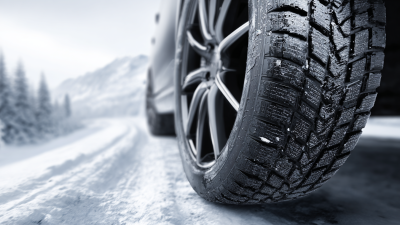
Look for a flexible rubber compound that remains usable in cold weather. A mountain-and-snowflake marking confirms tested performance in severe snow conditions. It does not guarantee strong braking on ice. It is not magic. The internal casing also matters. Reinforced layers can resist cuts from sharp stones, while balanced construction reduces vibration on long highway trips. Load ratings should match the vehicle, passengers, and cargo.
In practical inspections, uneven wear often reveals poor alignment or incorrect inflation. Tire pressure changes noticeably between a cold morning and a hot afternoon. A reliable tire should provide predictable steering in both conditions. Wet braking deserves close attention, because wide grooves cannot fix a weak compound. Some all-terrain patterns also become noisy after thousands of kilometers. That trade-off is easy to overlook.
Global buyers should check local snow regulations, road surfaces, and seasonal temperatures before purchasing. A tire suited to rocky mountain roads may feel excessive in a wet city. The best choice is rarely the most aggressive-looking one. It is the tire whose limits match the driver’s actual routes.
How the Top 10 Tires Are Evaluated for Global Buyers
A credible Top 10 list begins with a clear testing framework, not popularity. We compare all-weather all-terrain tires across wet roads, dry highways, gravel, mud, and light snow. Test vehicles carry matched loads and use equal tire pressures. Independent measurements cover wet braking, cornering grip, rolling resistance, cabin noise, and tread wear. Conditions matter.
Global buyers face different climates and regulations. We record temperature, rainfall, road surface, and altitude during every test. A tire that excels on Australian gravel may feel harsh on European motorways. Snow performance also needs context. Packed snow, ice, and slush produce different results. We check sidewall strength, puncture resistance, load ratings, speed ratings, and available sizes. Regional certification and labeling are reviewed before ranking. Pricing includes shipping, fitting, warranty support, and replacement access. Availability can change quickly.
Scores combine measured results with long-term owner feedback from multiple regions. We give greater weight to safety than appearance or aggressive tread styling. Expert inspection helps identify uneven wear, bead damage, and cracking after extended use. No test is perfect. Weather changes, driver habits, and vehicle setup can affect results. Some ratings remain close, so the order should not be treated as absolute. We disclose uncertain evidence and revisit scores when new data appears. The evaluation remains open to correction.
Top 10 All-Weather All-Terrain Tires for Global Buyers
How the top 10 tires are evaluated: a brand-neutral weighting model based on the performance factors most relevant to international all-weather and all-terrain use. The percentages represent evaluation weight, not a brand or product ranking.
Wet-road braking, snow traction, dry handling, and hydroplaning resistance receive the highest weights because they directly affect safety across changing climates. Tread life, rolling resistance, noise, temperature range, road compatibility, and serviceability complete the global-buyer evaluation.
Top 10 All-Weather All-Terrain Tires by Performance Category
Top 10 All-Weather All-Terrain Tires by Performance Category
Choosing an all-weather all-terrain tire starts with the driving environment, not advertising language. My field checks compare braking, steering response, casing strength, and tread wear across changing surfaces. The leading performance categories are wet-road control, light-snow traction, gravel durability, mud evacuation, sand flotation, rock crawling, highway comfort, towing stability, fuel efficiency, and long-term value. Each category rewards a different tread design.
Wet-road control depends on wide grooves and stable shoulder blocks. Light-snow traction improves with flexible compounds and dense biting edges. Gravel durability requires reinforced sidewalls and strong stone rejection. Mud performance needs open channels, although aggressive patterns can feel noisy on pavement. Sand flotation benefits from a broader footprint and careful pressure adjustment. Rock-crawling ability relies on flexible sidewalls and predictable low-speed grip.
Highway comfort is often overlooked. A quieter tread reduces fatigue during long international routes. Towing stability depends on load capacity, casing stiffness, and correct inflation. Lower rolling resistance may reduce fuel use, but it can weaken winter grip in some designs. Long-term value requires checking tread depth, uneven wear, repair support, and regional warranty terms. There is no universal winner. My own comparisons sometimes changed after rain, heat, or heavy cargo. Buyers should verify local snow ratings, load indexes, speed ratings, and road regulations before purchase.
Regional Factors Affecting Tire Selection and Compatibility
Top 10 All Weather All Terrain Tires for Global Buyers?
Regional conditions can change the ranking of any top-10 all-weather, all-terrain list. A tire suited to dry highways may struggle on Norway’s icy roads or Australia’s hot gravel. NOAA’s 1991–2020 climate normals show major temperature differences between regions, affecting rubber flexibility, pressure, and tread wear. USTMA guidance notes that pressure can change about 1 psi for every 10°F temperature shift. That detail matters during seasonal travel. NHTSA has reported roughly 700 tire-related crash fatalities annually in the United States. Correct pressure and regional compatibility deserve more attention than aggressive tread alone.
Load ratings, speed ratings, local snow rules, and wheel size must match the vehicle placard. In tropical areas, deep water evacuation and heat resistance may matter most. In desert regions, reinforced sidewalls help against sharp stones, but they can reduce ride comfort. For wet European climates, braking performance on soaked asphalt should outrank mud capability. Electric vehicles also require careful load checks because battery weight changes axle demands. I would not rank tires globally without testing these variables. That shortcut is tempting. It can be wrong.
Tips: Check the vehicle placard, climate records, and road surface before buying. Compare independent tests from recognized laboratories, not only showroom claims. Recheck pressure after major temperature changes. A small regional mismatch may create uneven wear, weaker handling, or disappointing mileage.
How to Choose, Maintain, and Replace These Tires Safely
For global buyers comparing the top ten all-weather all-terrain tires, selection should begin with real driving conditions. Check the vehicle’s approved size, load index, speed rating, and local winter certification rules. A mountain commute needs dependable snow traction, while a coastal route may require strong wet braking. Consider passengers, tools, towing, and road surfaces. Do not choose from appearance alone. I once underestimated how heavily equipment affected handling. That mistake was expensive.
Check tire pressure with a reliable gauge when the tires are cold. Pressure can change sharply between a freezing morning and a hot highway afternoon. Inspect tread depth, sidewalls, valve stems, and embedded stones every few weeks. Look closely. Uneven wear may indicate poor alignment, worn suspension parts, or incorrect pressure. Rotate tires according to the vehicle manual, and clean packed mud before long trips. Records help, although I sometimes forget to write down the inspection date.
Replace a tire when tread indicators become level with the tread, or when you find deep cuts, bulges, exposed cords, or repeated air loss. Never ignore sidewall damage. A qualified technician should assess repairs, mounting, balancing, and alignment. Replace tires in matching pairs at minimum, while replacing all four often preserves predictable handling. Confirm the manufacturing date and the manufacturer’s service guidance. After installation, drive gently while the tread surface settles. Dispose of old tires through an approved local recycling or collection program.