Contact Us

How to Read a Tire Speed Rating?

A tire’s sidewall carries more than a brand name and a size. Look closely, and you’ll find a letter near the load index: the tire speed rating. It describes a tire’s tested ability to manage speed under specified conditions. It does not tell you how fast to drive. As the U.S. Tire Manufacturers Association’s tire-safety guidance makes clear, a tire’s ratings must be considered alongside its load and fitment requirements. That distinction matters on a wet commute, a hot highway, or a car carrying extra passengers.

Small detail. Big consequence. A speed-rating letter can look like a simple code, but its meaning depends on the tire’s condition, inflation, load, and vehicle setup. A worn tire with the right letter is still worn. And a higher rating is not automatically the better choice for every vehicle. I’ve seen drivers focus on the letter while overlooking the tire pressure printed on the door-jamb placard. That’s an easy mistake; it’s worth questioning.

This guide explains where to find the rating, how to read common letters, and how to compare the tire with your vehicle’s specifications. It also covers what the rating cannot promise, including safe speed in every road or weather condition. The details can feel fussy. They are. Still, knowing what that sidewall code means can help you make a more informed replacement choice and ask a tire professional better questions.
How to Read a Tire Speed Rating?

Locate the Speed Rating on the Tire Sidewall

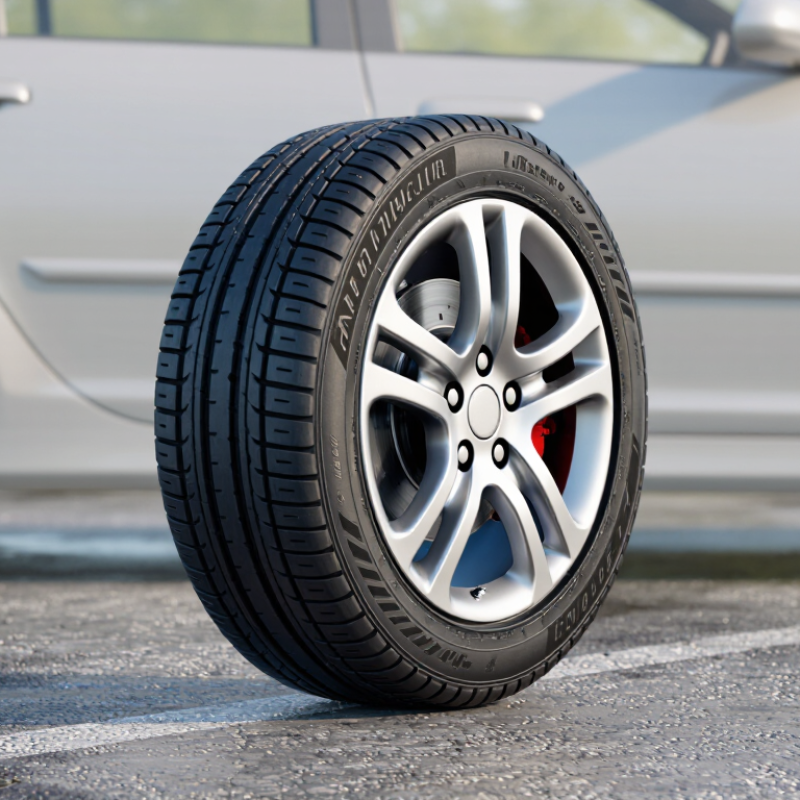
To locate a tire speed rating, read the raised characters on the sidewall, beside the tire-size marking. A common sequence looks like 225/60R17 99H. Here, 99 is the load index, and H is the speed symbol. Look closely. The R in 225/60R17 means radial construction, not a speed rating. The symbol usually appears at the end of the service description, though exact layouts can vary.

The U.S. Tire Manufacturers Association’s Tire Information Guide lists standardized speed categories; for example, H corresponds to 130 mph, V to 149 mph, and W to 168 mph under specified test conditions. These figures describe a tire’s tested capability, not a safe target for public roads. NHTSA’s TireWise guidance advises drivers to use the vehicle placard and owner’s manual when choosing replacement tires. Check all four sidewalls: mismatched or older replacement tires can make the markings confusing. I sometimes have to wipe dust from the lettering to read it clearly. That small step helps prevent confusing the load index with the speed symbol.
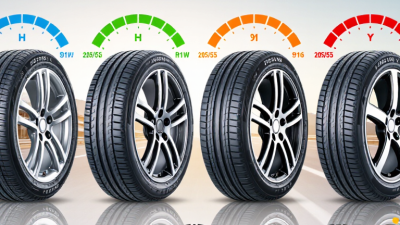
Identify the Speed-Rating Letter in the Tire Code

How to Read a Tire Speed Rating?

Identify the Speed-Rating Letter in the Tire Code

Look at the tire sidewall. In a code such as 205/55R16 91V, the final letter, V, is the speed symbol; 91 is the load index. The Tire and Rim Association’s standards tables match each symbol to a test-speed category: T corresponds to 190 km/h, H to 210 km/h, V to 240 km/h, W to 270 km/h, and Y to 300 km/h.

These figures describe controlled test capability, not a suggested driving speed. Not the wheel.

Check the full code, not just a letter you spot elsewhere on the sidewall. Some high-speed tires carry “ZR” in the size marking, while a separate W or Y may specify the actual speed category. The U.S. Tire Manufacturers Association’s tire-care guidance also stresses matching replacement tires to the vehicle maker’s specifications. That means checking the owner’s manual or placard, including load rating, not relying on the speed letter alone.

A rating assumes suitable tire condition, inflation, and load. It can be oddly easy to misread the code in a dim garage, so wipe the sidewall and read it twice. If markings conflict or seem incomplete, ask a qualified tire professional to verify the fitment.

Match the Letter to Its Rated Maximum Speed

On a tire sidewall, the speed rating is the letter near the end of the size and service description. In “205/55 R16 91V,” for example, V is the speed symbol; 91 is the load index.

The letter corresponds to a maximum speed under specified test conditions, not a recommended cruising speed. Check the vehicle handbook or door-jamb label before choosing replacements.

Common ratings include:

T at 190 km/h (118 mph)
H at 210 km/h (130 mph)
V at 240 km/h (149 mph)
W at 270 km/h (168 mph)

These figures assume properly inflated tires carrying the rated load, in suitable condition. Heat, damage, underinflation, and excess weight can reduce a tire’s safe capability. A higher letter alone does not make a tire a better match for every vehicle.

Small detail, big consequence.

Read the full marking, not just the letter. Two tires can share a speed symbol but differ in size, load capacity, or construction.

If the sidewall is dirty, wipe it and inspect the characters with a flashlight; the final letter can be easy to mistake. I would not rely on a quick glance or an online chart alone.

Confirm the exact specification with the vehicle documentation or a qualified tire professional, especially when the markings look unusual. A rating is a test limit, not a promise about real-road performance.

Understand What the Rating Does and Does Not Indicate

A tire’s speed rating is the letter molded into its sidewall, such as H, V, or W. The ETRTO Standards Manual assigns these symbols defined test-speed categories: H corresponds to 210 km/h, V to 240 km/h, and W to 270 km/h. These figures describe a tire’s tested capability under specified conditions. They are not recommended driving speeds. A letter is easy to overread.

The U.S. Tire Manufacturers Association’s tire-care guidance also stresses that pressure, load, and condition matter. A rating does not promise the same performance on a hot road, with worn tread, or in an overloaded vehicle. Nor does it indicate braking distance, wet-weather grip, or how long a tire will last. Look for the vehicle maker’s specified rating, then check the tire’s pressure and load guidance. Small details count: even a correct rating cannot compensate for low pressure. The distinction can feel less tidy than a single letter suggests. That is worth remembering.

How to Read a Tire Speed Rating? — Understand What the Rating Does and Does Not Indicate

A tire speed rating is a letter code on the tire sidewall that identifies the maximum speed at which the tire can carry its specified load under test conditions. It is a capability classification—not a recommended driving speed or a guarantee of safety at that speed.

Speed Rating Maximum Rated Speed Approximate Equivalent What to Know
L 75 mph 120 km/h A lower speed classification commonly associated with certain specialty or light-truck applications.
M 81 mph 130 km/h Check the vehicle manufacturer’s specifications before choosing a replacement tire.
N 87 mph 140 km/h The rating describes tested speed capability, not the tire’s overall performance in every condition.
P 93 mph 150 km/h Do not confuse the speed symbol with the tire’s load index, which is a separate code.
Q 99 mph 160 km/h Some winter or specialty tires may have a lower speed rating than the vehicle’s original tires.
R 106 mph 170 km/h Always follow vehicle-manufacturer guidance when selecting a tire with a different rating.
S 112 mph 180 km/h The rating does not account for worn tread, damage, underinflation, overloading, or poor road conditions.
T 118 mph 190 km/h Use the correct inflation pressure and keep the tire within its specified load limits.
U 124 mph 200 km/h A higher rating alone does not necessarily mean shorter stopping distances or better grip.
H 130 mph 210 km/h The letter order is not fully alphabetical; H appears after U in common speed-rating sequences.
V 149 mph 240 km/h For ratings of V and above, load capacity may vary at higher speeds; consult tire specifications.
W 168 mph 270 km/h This is a tire capability classification under defined test conditions, not a public-road speed target.
Y 186 mph 300 km/h Use only where the vehicle and tire specifications support the fitment and operating conditions.
(Y) Above 186 mph Above 300 km/h Parentheses indicate a rating used for tires tested above 300 km/h; check the tire maker’s specific data.

How to find it: On a sidewall marking such as 205/55R16 91V, the final letter, V, is the speed symbol. The number before it, 91, is the load index.

What it does not indicate: A speed rating is not a guarantee that a tire will remain safe at its rated speed in real-world conditions. It does not by itself specify traction, braking distance, handling, durability, or suitability for a particular vehicle.

Before replacing tires: Follow the vehicle placard and owner’s manual. Do not exceed posted speed limits, the tire’s load capacity, or the vehicle’s limits. Tire condition, inflation pressure, load, temperature, and road conditions all affect safe operation.

Check Compatibility When Choosing Replacement Tires

How to Read a Tire Speed Rating?

A tire speed rating is the letter on the sidewall that indicates its tested speed capability under specified conditions. It is not a target speed or a guarantee of safe handling at that pace. When choosing replacement tires, check the approved size and load index in your vehicle’s placard or owner’s manual. Then compare the replacement’s speed rating with the vehicle specification. A similar-looking tire can still differ in fit or capacity. That’s worth checking.

Tips: Read the full sidewall code, such as 205/55 R16 91V. The final letter is the speed rating; the number before it is the load index. Check both against reliable vehicle documentation, not appearance alone.

If the original rating is unavailable, don’t assume a lower-rated tire is suitable just because it fits the wheel. Ask a qualified tire professional to verify compatibility, especially when changing wheel size or replacing only two tires. Keep tires on the same axle consistent in size and capability, and follow the vehicle maker’s guidance for matching front and rear sets. Specifications can vary by trim. It’s easy to focus on the letter and overlook load capacity, so check both before buying.