What Are the 2026 Best All Terrain SUV Tires?
Choosing the 2026 best all terrain suv tires requires more than counting tread blocks or admiring aggressive sidewalls. These tires must manage wet highways, gravel shoulders, snow-covered roads, and heavy family cargo. They also need predictable steering when a sudden obstacle appears.
The U.S. Tire Manufacturers Association emphasizes that tires are a vehicle’s critical contact with the road. Tire Rack executive Matt Edmonds states, “The tires are the only thing connecting your vehicle to the road.” That simple point should guide every comparison. A tire may look rugged under showroom lights, yet produce excessive noise or weak wet braking at highway speed. Appearance is not performance.
Recent testing from Consumer Reports and the J.D. Power 2025 U.S. Original Equipment Tire Customer Satisfaction Study highlights measurable priorities, including braking, handling, ride comfort, wear, and noise. The U.S. Tire Manufacturers Association also stresses regular pressure checks and tread inspections. Therefore, this guide evaluates all terrain suv tires through real driving needs, not marketing language alone. We will examine wet grip, snow traction, tread life, road comfort, fuel economy, and sidewall durability. The Three-Peak Mountain Snowflake symbol matters for severe winter conditions, but it does not guarantee the shortest stopping distance. That distinction is easy to miss.
No single tire wins every route. Some comparisons still overvalue mud performance. That is worth questioning. A balanced tire may serve daily commuting better than an extreme design. This guide combines test evidence, manufacturer specifications, and practical road experience to identify the strongest 2026 choices. Expect trade-offs. There are always trade-offs.
What Defines a High-Quality All-Terrain SUV Tire in 2026?
What Defines a High-Quality All-Terrain SUV Tire in 2026?
A high-quality all-terrain SUV tire must balance
traction, stability, comfort, and durability.
Aggressive tread alone is not enough. The U.S. Tire Manufacturers Association recommends checking inflation pressure monthly, because underinflation increases heat buildup and uneven wear. For heavier SUVs, the correct load index matters just as much as tread design. A strong casing can support extra cargo without feeling vague on winding roads.
Wet performance deserves close attention.
AAA testing found that tires worn to 4/32-inch tread needed about
87 feet to stop from 60 mph, compared with roughly
70 feet for new tires. That difference can decide whether an SUV stops before a crosswalk. Look for wide grooves, stable shoulder blocks, and severe-snow certification when winter travel is possible. Snow traction matters.
Real-world testing also reveals compromises.
Deeper tread may improve mud grip, but it can increase road noise and rolling resistance. The U.S. Department of Energy notes that rolling resistance affects fuel efficiency, which matters even more for heavier SUVs and electric utility vehicles. I would not choose the loudest tire simply because it looks toughest. A quiet highway ride can be valuable after several hours behind the wheel.
Still, no tire performs perfectly everywhere. Drivers should compare
measured wet braking, winter traction, treadwear evidence, and pressure behavior
before buying.
Which All-Terrain Tire Features Suit Different SUV Driving Conditions?
What Are the 2026 Best All Terrain SUV Tires?
Choosing an all-terrain tire depends on where your SUV spends most of its time. Highway commuters need stable steering, low road noise, and even tread wear. Look for a balanced tread pattern and reinforced shoulders. These features improve control during lane changes and long wet-road journeys.
Drivers using gravel roads need stronger sidewalls and stone-resistant grooves. Loose surfaces reward deeper, open tread blocks that clear small rocks. Mud requires wider gaps, but aggressive patterns can feel noisy on pavement. For snowy regions, check for the three-peak mountain snowflake marking. It indicates tested winter traction, though it does not replace careful driving. Heavy SUVs may also need a higher load rating. Match it with the vehicle manufacturer’s specification, not guesswork.
Tips: Check tread depth, sidewall damage, and air pressure before rough trips. Reduce pressure only when the terrain and vehicle guidance allow it. Reinflate before returning to pavement. Rotate the tires regularly, especially after frequent gravel driving. A quiet ride can hide weak wet braking, so comfort should not be the only measure. I once underestimated shoulder wear after repeated sharp turns; visual checks would have caught it earlier. Tire choice is rarely perfect for every surface. Consider your usual roads, seasonal weather, cargo weight, and driving habits before deciding.
What Are the 2026 Best All-Terrain SUV Tires?
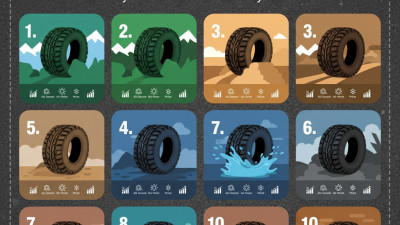
Feature suitability varies by driving condition. This normalized 1–10 index compares how strongly each all-terrain tire feature supports common SUV use cases; it is not a brand or laboratory test ranking.
Key takeaway: Highway and wet-road driving benefit most from water evacuation and reinforced casing design, while snow, gravel, mud, and rocky trails require stronger siping, open shoulders, sidewall protection, and durable casing construction.
How to Choose the Right Tire Size, Load Rating, and Speed Rating
Choosing the best all-terrain SUV tire for 2026 starts with the correct size, not the most aggressive tread. Read the driver’s door-jamb placard and owner’s manual before comparing tires. A common mistake is selecting a wider tire for appearance without checking suspension clearance. Do not guess.
In a size such as 265/70R17, “265” indicates width, “70” shows sidewall height, and “17” matches the wheel diameter. The letters and numbers after the size may identify construction or service limits. Changing size can affect steering feel, fuel use, speedometer accuracy, and clearance near the wheel well. A certified tire professional can verify those measurements, especially after a lift or suspension modification. Measure twice.
Load rating matters when an SUV carries passengers, camping equipment, or a trailer. Each tire should meet or exceed the vehicle manufacturer’s required capacity. A higher rating is not automatically better if it creates a harsh ride or conflicts with wheel specifications. Speed rating indicates the tire’s tested operating capability under controlled conditions, not a recommended driving speed. Choose a rating that matches or exceeds the vehicle requirement. Wet pavement, gravel, and heat can reduce real-world performance. Some drivers focus only on mud traction, then overlook braking stability on cold asphalt. That is not enough. Check the complete tire label, maintain the placard pressure when cold, and inspect tread wear regularly.
What Are the 2026 Best All Terrain SUV Tires? - How to Choose the Right Tire Size, Load Rating, and Speed Rating
Dimensions are approximate. Always confirm compatibility with the vehicle placard, owner’s manual, wheel specifications, suspension clearance, and the tire manufacturer’s fitment information.
| Common All-Terrain Tire Size |
Approx. Overall Diameter |
Approx. Section Width |
Typical Rim Diameter |
Example Load Index |
Maximum Load per Tire |
Example Speed Rating |
Maximum Rated Speed |
Suitable Use Profile |
| 225/65R17 |
28.5 in / 724 mm |
8.9 in / 225 mm |
17 in |
102 |
1,874 lb / 850 kg |
H |
130 mph / 210 km/h |
Compact SUVs and crossovers; balanced road comfort, wet handling, and light gravel use. |
| 235/65R17 |
29.0 in / 737 mm |
9.3 in / 235 mm |
17 in |
104 |
1,984 lb / 900 kg |
H |
130 mph / 210 km/h |
Small and midsize SUVs needing additional footprint without a major diameter increase. |
| 245/65R17 |
29.5 in / 749 mm |
9.6 in / 245 mm |
17 in |
107 |
2,149 lb / 975 kg |
H |
130 mph / 210 km/h |
Midsize SUVs; a practical compromise between steering response, traction, and fuel efficiency. |
| 255/70R18 |
32.1 in / 815 mm |
10.0 in / 255 mm |
18 in |
113 |
2,537 lb / 1,150 kg |
T |
118 mph / 190 km/h |
Large SUVs and light-duty off-road applications where extra ground clearance is desired. |
| 265/65R18 |
31.6 in / 803 mm |
10.4 in / 265 mm |
18 in |
114 |
2,601 lb / 1,180 kg |
T |
118 mph / 190 km/h |
Three-row SUVs and vehicles carrying passengers, cargo, or moderate trailer loads. |
| 265/70R17 |
31.6 in / 803 mm |
10.4 in / 265 mm |
17 in |
115 |
2,679 lb / 1,215 kg |
T |
118 mph / 190 km/h |
Popular midsize and full-size SUV format for mixed highway, gravel, mud, and trail driving. |
| 275/65R18 |
32.1 in / 815 mm |
10.8 in / 275 mm |
18 in |
116 |
2,756 lb / 1,250 kg |
T |
118 mph / 190 km/h |
Heavy midsize and full-size SUVs requiring a wider contact patch and higher carrying capacity. |
| 285/70R17 |
32.7 in / 831 mm |
11.2 in / 285 mm |
17 in |
121 |
3,197 lb / 1,450 kg |
S |
112 mph / 180 km/h |
Off-road-oriented SUVs and utility vehicles; verify wheel-well, steering, and suspension clearance. |
| LT265/70R17 |
31.6 in / 803 mm |
10.4 in / 265 mm |
17 in |
121/118 |
3,197 lb / 1,450 kg single;
2,910 lb / 1,320 kg dual |
S |
112 mph / 180 km/h |
Light-truck construction for heavier cargo, towing, and rough-surface use; usually firmer and heavier than P-metric tires. |
How to read the ratings:
The tire size identifies width, aspect ratio, construction, and wheel diameter. The load index is a standardized numerical code for maximum load capacity per tire; a higher number generally indicates greater capacity, but the complete tire specification must be checked. Speed ratings indicate the maximum tested speed under specified conditions: S = 112 mph / 180 km/h, T = 118 mph / 190 km/h, H = 130 mph / 210 km/h, and V = 149 mph / 240 km/h. Do not select a lower load or speed rating than the vehicle manufacturer specifies.