| 1. Understanding Track Tires |
| Definition |
Primary purpose |
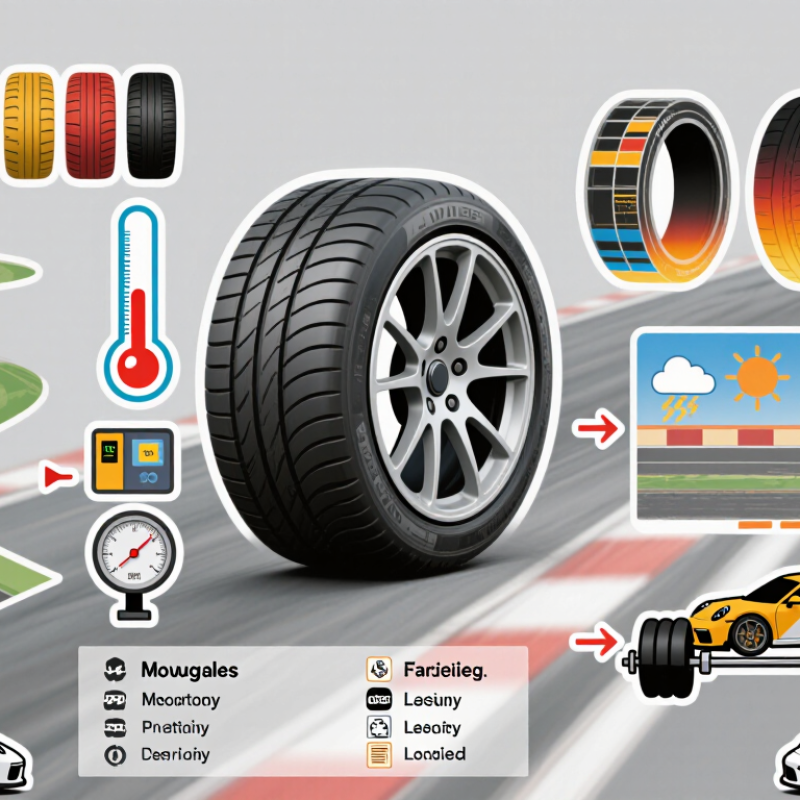
Track tires are designed to provide predictable grip, steering response, braking performance, and heat resistance during closed-course driving. |
Use them only within the application and surface conditions specified by the tire manufacturer. |
| Tread design |
Slick, semi-slick, or treaded |
Slick tires have little or no tread and maximize dry-surface contact. Semi-slick and treaded tires use grooves to help evacuate water and may be more versatile. |
Never use a slick or track-only tire on wet public roads unless it is specifically approved and legally permitted for that use. |
| Compound |
Rubber hardness and operating behavior |
Softer compounds generally offer more short-term dry grip but can wear faster. Harder compounds usually provide longer service life and greater resistance to overheating. |
Choose the compound according to vehicle weight, track temperature, session length, driving style, and the tire maker's application guidance. |
| Construction |
Radial or bias-ply design |
Radial tires are common on modern road-based track cars. Bias-ply tires have different handling, heat, and pressure characteristics. |
Do not mix construction types on the same axle unless the vehicle and tire manufacturers explicitly approve the combination. |
| Legal status |
Road-legal or track-only |
Some track tires are approved for public-road use, while others are intended only for closed courses and may lack required markings, tread, or wet-weather capability. |
Check sidewall markings, local regulations, insurance requirements, and the event organizer's rules before driving to or from a circuit. |
| 2. Choosing the Correct Track Tire |
| Vehicle compatibility |
Size, load capacity, and speed rating |
The tire must match the vehicle's approved wheel diameter, width, load requirement, and speed requirement. The tire size is shown on the sidewall, for example, 245/40R18. |
Never select a tire solely by width or appearance. Confirm complete fitment with the vehicle and wheel specifications. |
| Wheel fitment |
Rim width and clearance |
Wheel width affects the tire's shape, contact patch, steering response, and sidewall behavior. Brake calipers, suspension parts, and bodywork also require adequate clearance. |
Test clearance at full steering lock and full suspension compression before a track session. |
| Track surface |
Dry, damp, wet, abrasive, or smooth |
Dry surfaces favor low-groove designs. Wet surfaces require usable grooves and water evacuation. Abrasive surfaces can increase wear and heat generation. |
Use a treaded, wet-capable tire when rain is possible. Avoid relying on a dry-focused tire when standing water may occur. |
| Operating temperature |
Cold, moderate, or hot conditions |
Grip changes with tire temperature. A tire that works well in cool conditions may overheat in hot weather, while a hard compound may struggle to reach useful temperature on a cold day. |
Follow the tire maker's recommended hot-pressure and temperature range instead of using a universal pressure number. |
| Vehicle balance |
Front/rear grip distribution |
Different tire sizes or compounds can change understeer, oversteer, braking stability, and traction. |
Keep the same tire model and compound on each axle unless a tested setup specifically requires otherwise. |
| Expected use |
Track days, competition, or dual-purpose driving |
Track-day tires prioritize predictable performance and manageable wear. Competition tires may prioritize maximum lap-time performance with shorter service life and narrower operating conditions. |
For occasional use, select a tire with adequate warm-up behavior, durability, and wet-weather tolerance rather than choosing only the softest option. |
| 3. Preparing Before the Track Session |
| Visual inspection |
Tread, sidewall, bead, and shoulder condition |
Look for cuts, bulges, cracks, exposed cords, punctures, trapped debris, uneven wear, and damage near the bead. |
Do not use a tire with exposed cords, a sidewall bulge, a deep cut, or structural damage. |
| Age and storage history |
Manufacturing date and condition |
Tire age is shown by the date code on the sidewall. Heat, ultraviolet light, moisture, and long-term storage can degrade rubber even when tread remains. |
Use the tire manufacturer's age and condition guidance. Replace tires that show hardening, cracking, or deterioration regardless of remaining tread depth. |
| Cold pressure |
Pressure before the first session |
Track tires normally gain pressure as they heat. The correct starting pressure depends on tire construction, vehicle load, ambient temperature, and track conditions. |
Begin with the manufacturer's recommended starting point, record pressures, and adjust in small steps after checking hot readings. |
| Torque and installation |
Wheel fastening |
Wheel nuts or bolts must be clean, correctly seated, and tightened to the vehicle manufacturer's specified torque. |
Use a calibrated torque wrench. Recheck torque after the first heat cycle or as required by the event and vehicle instructions. |
| Break-in |
Initial heat cycles |
Some tires require a gradual first session to stabilize the tread and casing. Aggressive sliding during the first laps can cause uneven overheating. |
Follow the tire maker's break-in procedure and build speed progressively during the opening laps. |
| 4. Maintaining Track Tires During Use |
| Pressure monitoring |
Cold and hot pressure records |
Measure each tire with the same accurate gauge under comparable conditions. Record cold pressure, hot pressure, ambient temperature, and session length. |
Make adjustments only after identifying a consistent pattern. A single reading may be affected by traffic, driver input, or track temperature. |
| Temperature monitoring |
Inner, center, and outer tread temperatures |
A probe or suitable infrared measurement can reveal whether the tire is overheating, underworking, or carrying an uneven load across the tread. |
Take readings immediately after the session and compare left-to-right and inner-to-outer patterns. |
| Wear pattern |
Shoulder wear, graining, blistering, and tearing |
Excessive shoulder wear can indicate insufficient camber or excessive cornering load. Graining and tearing can result from unsuitable temperatures, pressures, or setup. |
Reduce pace and inspect the tire if wear becomes rapid, localized, or visibly structural. |
| Rotation |
Position changes on the vehicle |
Some tires can be rotated side-to-side or front-to-rear, while directional or asymmetric tires may restrict rotation. |
Follow the rotation arrows and inside/outside markings. Do not reverse a directional tire or change its intended orientation. |
| Cool-down |
Post-session temperature reduction |
A controlled cool-down lap allows temperatures to fall gradually and helps avoid parking immediately with very high localized heat. |
After parking, avoid setting the parking brake while components are extremely hot if the vehicle manufacturer warns against it. |
| 5. Safe Replacement Decisions |
| Tread condition |
Remaining tread and wear indicators |
Track use can consume tread rapidly, and wear may be uneven across the tire. Some track tires have limited or specialized indicators. |
Replace the tire when it reaches the manufacturer's limit, shows exposed cords, or no longer provides a consistent contact surface. |
| Structural damage |
Sidewall, shoulder, bead, and casing |
Bulges, deep cuts, impact damage, cord exposure, bead damage, and severe flat-spotting can compromise the tire's structure. |
Replace immediately and have questionable damage assessed by a qualified tire professional. |
| Heat-cycle life |
Performance after repeated heating and cooling |
Repeated track heat cycles can harden some compounds and reduce grip before the tread is fully worn. |
Track the number of sessions or heat cycles when the tire manufacturer provides a limit, and replace tires when grip becomes inconsistent. |
| Puncture repair |
Repair suitability |
Not every puncture is repairable. Damage in the sidewall or shoulder, large punctures, run-flat damage, and internal structural damage generally require replacement. |
Do not use a plug-only repair for high-speed track driving. Obtain a professional internal inspection before reuse. |
| Mixed replacement |
New and used tires together |
Unequal grip, tread depth, compound, or heat-cycle history can alter vehicle balance. |
Keep matching tires on the same axle and replace in axle pairs when practical, especially on performance vehicles. |
| 6. Storage and Transport |
| Storage environment |
Temperature, light, and moisture |
Store tires in a cool, dry, clean, and well-ventilated location away from direct sunlight, ozone-producing equipment, solvents, oils, and fuel. |
Keep tires protected from chemicals and avoid prolonged exposure to extreme heat or freezing conditions. |
| Mounted storage |
Mounted versus unmounted tires |
Mounted tires can be stored on wheels at a suitable pressure. Unmounted tires should be kept upright unless the manufacturer provides different instructions. |
Do not stack unmounted tires for long periods or suspend them from hooks, as distortion may occur. |
| Transport |
Protection during travel |
Cover tires to protect them from sunlight and secure them so they cannot move, rub against sharp edges, or contact chemicals. |
Never transport loose tires where they can interfere with pedals, controls, visibility, or emergency equipment. |
| 7. Safety Controls |
| Speed and limits |
Vehicle and tire operating limits |
Track tires do not eliminate the effects of excessive speed, overheating, suspension problems, incorrect alignment, or driver error. |
Stay within the tire's speed rating and the vehicle's limits. Stop immediately if vibration, sudden pressure loss, or unusual handling occurs. |
| Pressure adjustment |
Incremental setup changes |
Pressure changes affect the contact patch, response, heat generation, and wear. Excessively low pressure can allow the tire to deform or overheat; excessive pressure can reduce contact area. |
Adjust cautiously in small increments and recheck after a full session under comparable conditions. |
| Professional support |
When expert inspection is required |
A qualified tire technician should inspect tires after a major impact, suspected internal damage, repeated pressure loss, or an unexplained change in handling. |
When in doubt, remove the tire from service. The cost of replacement is lower than the risk of a tire failure. |
| Record keeping |
Setup and service log |
A useful log includes tire size, compound, date code, heat cycles, cold and hot pressures, alignment settings, temperatures, session time, and observed wear. |
Use the records to identify trends and make repeatable adjustments rather than relying only on memory. |