Understanding Tire Speed Ratings: 5 Essential Tips for Safe Driving
When it comes to driving safety, one of the important elements often overlooked by many drivers is the tire speed rating. This rating provides crucial information about how well a tire can perform at high speeds, ensuring that it can safely handle the demands of dynamic driving conditions. Understanding tire speed ratings is essential not just for performance enthusiasts, but for anyone who wants to maintain their vehicle's safety and efficiency on the road.
In this guide, we will explore five essential tips that will help you navigate the intricacies of tire speed ratings. By grasping the significance of these ratings, you will be better equipped to make informed decisions when purchasing new tires, thereby enhancing your overall driving experience. From the implications of different ratings to understanding how they influence your vehicle's performance, our insights aim to ensure that your tires are not just suitable for your driving style but also designed to maximize your safety.

Understanding Tire Speed Ratings: An Overview of Key Concepts
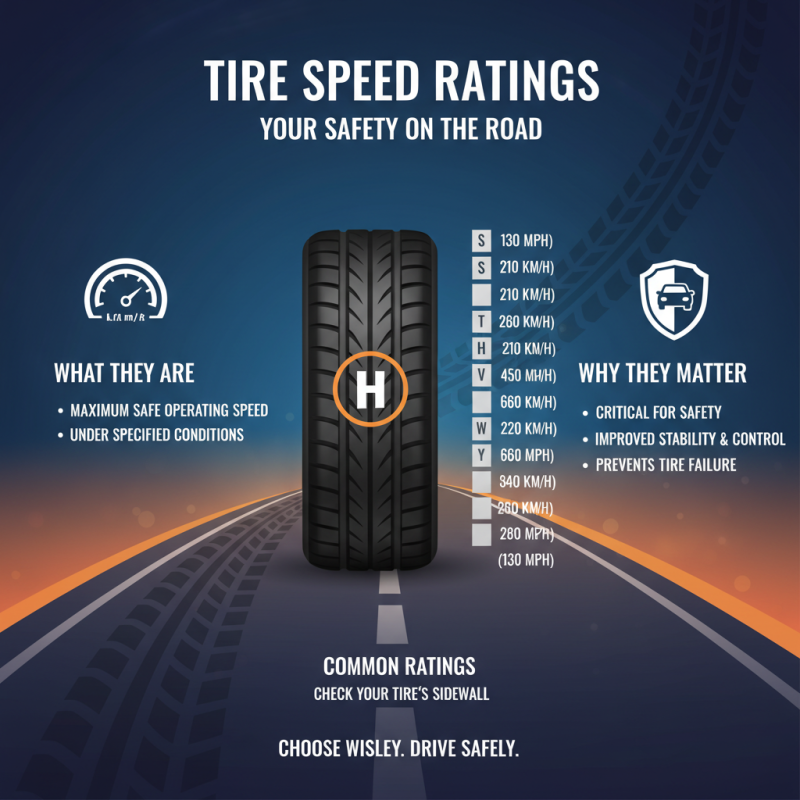
Tire speed ratings play a crucial role in ensuring safe driving experiences. These ratings, designated by letters ranging from A to Z, indicate the maximum speed at which a tire can safely perform under specified conditions. For instance, a tire rated with a speed symbol of "H" is approved for speeds up to 130 mph (210 km/h), while a "V" rated tire can safely handle speeds of up to 149 mph (240 km/h). Understanding these ratings helps drivers choose the right tires based on their driving habits, vehicle type, and road conditions.
According to a report from the Tire Industry Association, nearly 4,700 accidents per year are attributed to tire-related issues, underscoring the importance of adhering to the recommended speed ratings. Furthermore, improper selection of tire speed ratings can not only lead to compromised vehicle handling but also affect overall tire longevity. For instance, using tires with a speed rating lower than what the vehicle manufacturer recommends can result in overheating and potential tire failure during high-speed travel. Therefore, understanding tire speed ratings is essential not only for enhancing performance but also for promoting overall safety on the road.
Understanding Tire Speed Ratings: 5 Essential Tips for Safe Driving
| Speed Rating |
Maximum Speed (mph) |
Typical Usage |
Performance Characteristics |
| A |
up to 40 |
Passenger cars (slow) |
Basic performance, suitable for low-speed vehicles |
| B |
up to 50 |
Passenger cars (slow) |
Basic performance, slightly better than A |
| C |
up to 62 |
Light trucks and SUVs |
Enhanced durability for off-road conditions |
| D |
up to 65 |
Passenger cars |
Standard performance for everyday driving |
| E |
up to 68 |
Passenger cars |
Improved grip and stability at higher speeds |
| F |
up to 73 |
Performance vehicles |
High-speed handling and performance |
The Importance of Tire Speed Ratings for Safe Driving
Tire speed ratings are a critical component of vehicle safety that drivers often overlook. These ratings indicate the maximum speed at which a tire can safely operate under specified conditions. Understanding these ratings is essential for ensuring that your vehicle performs as intended, especially in high-speed situations. Choosing tires with appropriate speed ratings can contribute significantly to overall driving stability and control, ultimately enhancing safety on the road.
Moreover, the importance of adhering to the recommended tire speed ratings cannot be understated. When tires are pushed beyond their rated capabilities, the risks of tire failure increase dramatically. This can lead to blowouts or loss of control, which are particularly hazardous in emergency situations or during high-speed maneuvers. Therefore, selecting tires based on the manufacturer’s specifications not only assures compliance with safety standards but also provides peace of mind while driving at varying speeds. By prioritizing the correct tire speed rating, drivers can ensure a safer and more reliable driving experience.
How to Read and Interpret Tire Speed Ratings Effectively
Understanding tire speed ratings is crucial for ensuring safe driving. The speed rating is indicated by a letter found on the tire's sidewall, representing the maximum speed a tire can safely sustain under optimal conditions. For example, a tire rated 'H' can handle speeds up to 130 mph, while a 'V' rating is suitable for speeds up to 149 mph. Familiarizing yourself with these ratings helps in making informed choices about tire selection, especially if you regularly drive at high speeds.
To effectively read and interpret tire speed ratings, start by locating the tire's sidewall information. Here, you'll find a series of numbers and letters, where the last letter typically denotes the speed rating. It's essential to not only consider the speed rating when purchasing new tires but also to ensure they match your vehicle's specifications and your driving habits. Additionally, remember that the speed rating is valid only when the tire is used at the recommended load capacity, so always check the tire's load index as well. By understanding these elements, you can enhance your driving safety and performance on the road.
Factors Affecting Tire Speed Ratings and Performance
When it comes to tire speed ratings, understanding the various factors that influence these ratings is crucial for safe driving. One of the primary elements affecting a tire's speed capability is its construction, which encompasses materials such as rubber compounds and the tire’s internal structure. For instance, tires designed for high performance often utilize softer rubber compounds that provide better grip at elevated speeds, but may wear out more quickly than harder compounds used in regular tires. According to the Tire and Rim Association, proper tire construction can significantly impact both performance and durability, with high-performance tires typically rated for speeds exceeding 149 mph.
Another critical factor influencing tire speed ratings is temperature stability. Tires that can maintain structural integrity and performance at high temperatures are essential, especially for high-speed driving conditions. The American Society for Testing and Materials (ASTM) reports that temperature fluctuations can affect tire pressure and, consequently, performance characteristics such as traction and handling. Moreover, maintaining optimal tire pressure is essential, as under-inflation can lead to increased heat build-up, thereby reducing a tire's speed rating and overall safety. The interplay between tire quality, design, and the environment underscores the importance of selecting the right tire for specific driving conditions, ultimately enhancing both performance and safety on the road.
Choosing the Right Tires Based on Speed Ratings for Your Vehicle
When choosing the right tires for your vehicle, understanding speed ratings is crucial for safe driving. The speed rating is a letter that indicates the maximum speed a tire can sustain safely under specific conditions. It's essential to select tires that match or exceed the speed capability of your vehicle to ensure optimal performance and safety.
Tip 1: Always refer to your vehicle’s owner manual to determine the recommended speed rating for your tires. This guidance ensures that you select tires suitable for your vehicle's performance, particularly if you drive at higher speeds or regularly travel on highways.
Tip 2: Consider your driving habits and the types of roads you frequently encounter. If you often drive at high speeds or in demanding conditions, choose tires with a higher speed rating. This not only enhances safety but can also improve handling and stability during spirited driving.
Tip 3: Remember that the speed rating is not just about speed; it also relates to the tire's construction and heat resistance. Higher-rated tires are designed to perform better under stress and can handle the demands of aggressive driving or heavy loads. Always prioritize quality and ratings when selecting tires for your safety and peace of mind.