Contact Us

What is All Season Truck Tires and How Do They Perform?

All season truck tires are essential for many drivers. They provide versatility throughout the year. These tires are designed to perform well in various conditions, from rain to light snow.

When it comes to performance, all season truck tires offer a balanced grip. They have tread patterns that enhance traction on different surfaces. However, some drivers find that true winter conditions can challenge their effectiveness. While they handle well in moderate conditions, they're not always perfect.

Many truck owners appreciate the convenience of all season tires. They allow for reduced seasonal changes. Yet, some may question if they truly meet all needs. Drivers should consider their local climate and personal driving habits. It's crucial to reflect on whether all season truck tires will meet specific demands.

What is All Season Truck Tires and How Do They Perform?

Definition of All Season Truck Tires

What is All Season Truck Tires and How Do They Perform?

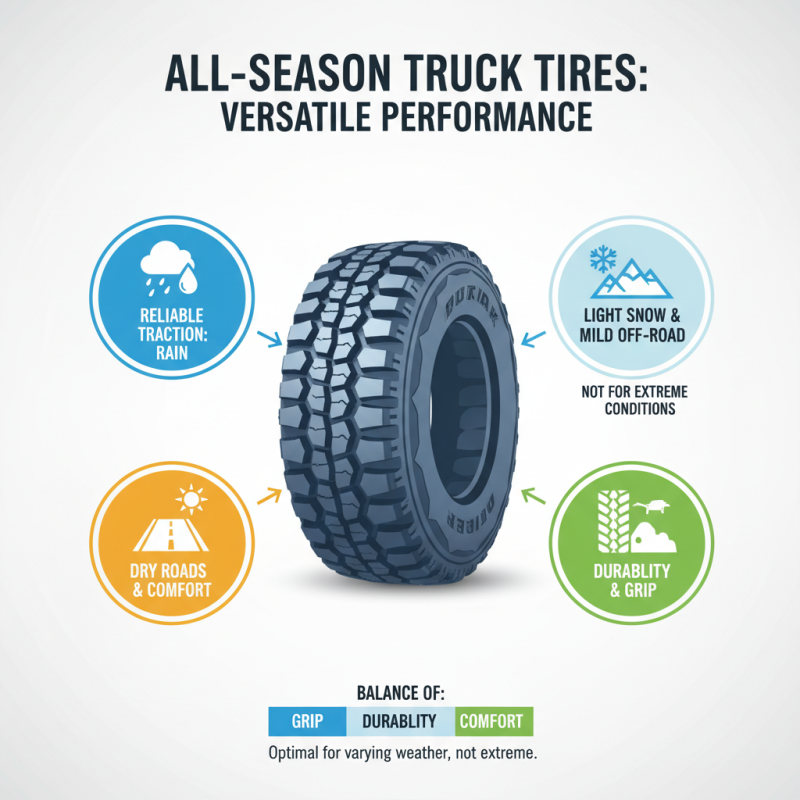
All season truck tires are designed for versatile performance across varying weather conditions. These tires balance grip, durability, and comfort. They provide reliable traction in rain, light snow, and dry conditions. Their tread patterns are crafted to handle some off-road situations, too. However, they may not be optimal for extreme winter or summer conditions.

When choosing all season truck tires, consider your typical driving environment. If you drive mainly in urban areas, these tires perform well. However, if you often travel in severe weather or rugged terrains, you might need specialized tires.

Tip: Regularly check tire pressure and tread depth. Maintaining the right pressure ensures better fuel efficiency. Tread depth impacts traction, especially during rain.

These tires offer a good compromise but might not excel in any one category. You might notice some performance limitations during heavy snow or extreme heat. Reflect on your driving habits. It’s essential to ensure you select tires that complement your needs and not just settle for a general option.


Key Features of All Season Truck Tires

All-season truck tires are designed for versatile performance throughout various weather conditions. They blend characteristics suited for both summer and winter. The tread patterns usually have a mix of wide grooves and sipes. This design aids in water evacuation, reducing hydroplaning risks during rain.

Key features of all-season truck tires include durability and comfort. The rubber compounds used are typically tougher. This means they resist wear and can handle heavy loads effectively. Additionally, these tires often provide a quieter ride. However, in extreme winter conditions, they may not perform as well as dedicated winter tires. Many drivers overlook this limitation, which can lead to safety issues.

Another feature is the temperature adaptability. All-season tires are engineered to remain flexible in various temperatures. Yet, this flexibility sometimes results in subpar performance in extreme conditions. Drivers should consider this when choosing tires for their trucks. Balancing these factors can be challenging but is crucial for optimal driving performance.

Performance Analysis in Various Weather Conditions

What is All Season Truck Tires and How Do They Perform?

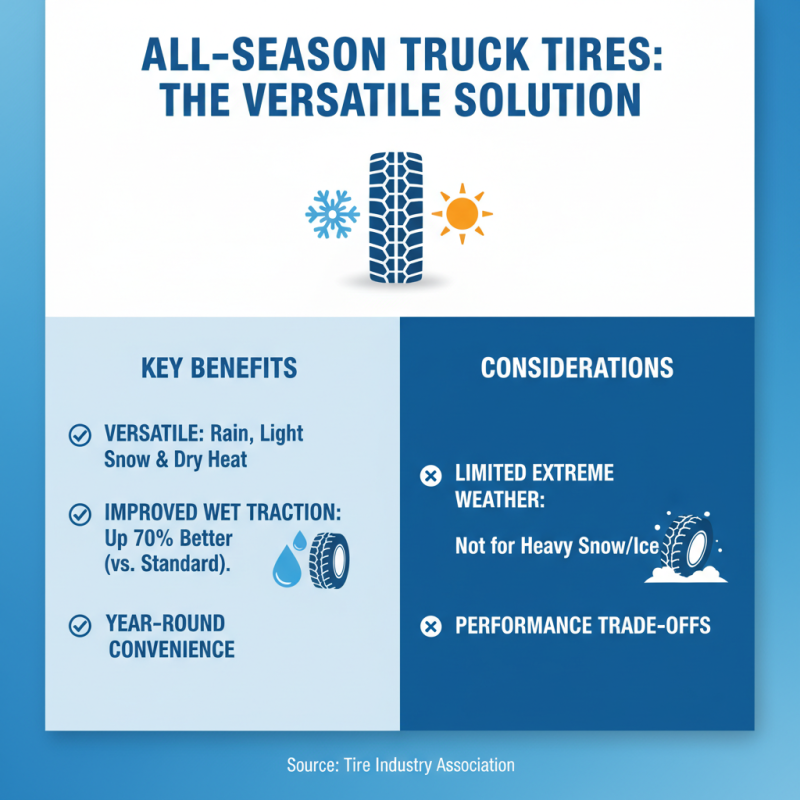
All season truck tires offer a versatile solution for varying weather conditions. They are designed to perform well in rain, light snow, and even dry heat. According to the Tire Industry Association, all season tires can provide up to 70% better traction in wet conditions compared to standard tires. However, their performance can sometimes be limited in extreme weather.

In snowy regions, all season tires may struggle. Their tread patterns are less optimized for deep snow compared to winter tires. It is important to note that while these tires perform adequately for most conditions, they might not be the best choice for heavy snow or ice. A study by Consumer Reports notes that all season tires can lose grip significantly when temperatures drop below 32°F (0°C).

Tip: Always check the tire tread depth and condition regularly. This can help maintain optimal grip, especially in adverse weather.

While all season tires are a great compromise, they do come with trade-offs. Drivers should assess their specific driving needs and consider local weather patterns. In certain regions, dedicated winter tires may enhance safety during harsh winter months. Balancing convenience with safety is key in making tire choices.

Tip: If you often drive in wet conditions, look for tires with better water dispersion features. This can help reduce hydroplaning risk.

Comparative Advantages Over Seasonal Tires

All season truck tires are designed for versatility. They perform well in various weather conditions, including rain, snow, and dry pavements. This adaptability is a significant advantage. Instead of switching tires with the seasons, drivers can rely on one set for the entire year. This saves time and reduces costs associated with regular tire changes.

In contrast to seasonal tires, all season options offer reliable performance year-round. They feature a balanced tread pattern that enhances grip in different environments. However, they may not excel in extreme conditions. For instance, during heavy snowfall, seasonal tires may provide better traction. This is a point for drivers to consider seriously. The compromise in performance is not always clear-cut.

Drivers often appreciate the convenience of all season tires. It allows them to avoid the hassle of seasonal adjustments. Still, it's essential to evaluate specific driving needs. If one frequently navigates through harsh winters, seasonal alternatives might be more effective. The trade-offs can be significant. All season tires are a practical choice but may not be perfect for everyone.

Maintenance Tips for Longevity and Performance

All season truck tires provide versatile performance. Proper maintenance is crucial for longevity. Regularly check tire pressure. This ensures optimal performance and safety. Underinflated tires wear faster and consume more fuel.

Rotate your tires every 5,000 to 7,000 miles. This promotes even wear across all tires. It’s important, but often overlooked. Neglecting this step can lead to premature wear. Inspect the tread depth regularly. If the tread is too worn, traction suffers. Proper tread depth is key for wet and slippery conditions.

Cleaning your tires is a helpful maintenance step. Remove debris and dirt to prolong their life. Use a soft brush and mild soap. This simple process can make a big difference. Don’t forget to check for any visible damage or cracks. Staying alert to these issues can prevent costly replacements. Regular care will improve handling and extend the life of your all season tires.

What is All Season Truck Tires and How Do They Perform? - Maintenance Tips for Longevity and Performance

Tire Feature Description Performance Rating Maintenance Tips
Tread Design Unique tread patterns for diverse weather conditions. Good Regularly check tread depth and rotate tires.
Traction Offers decent grip on both wet and dry surfaces. Moderate Maintain proper air pressure to enhance grip.
Durability Designed for extended use, with wear-resistant materials. High Avoid overloading and inspect for damage regularly.
Noise Level Quieter performance compared to winter tires. Good Check for uneven wear; it can increase noise.
Temperature Range Effective in moderate temperatures; not for extreme weather. Fair Store in a controlled environment during off-seasons.